Tan Sri Azman Hashim, President, MAJECA, Datuk Seri Mohamed Iqbal, Vice-President, MAJECA, Tan Sri Dr Michael Yeoh, Hon. Secretary and Mr Goh Peng Ooi, EXCO Member, MAJECA had a luncheon with H.E. Takahashi Katsuhiko on 3 December 2021 hosted by Tan Sri Azman Hashim.
Also in attendance at this luncheon were, Mr Nagakawa Kazutaka, Second Secretary, Embassy of Japan, Mr Hosomi Masashi, Economic Counsellor and Ms Ng Su Fun, Executive Secretary, MAJECA.
The visit welcomed Ambassador Takahashi’s new posting to Malaysia, and introduced MAJECA and its activities and long history of promoting bilateral economic ties between the two countries. The Ambassador was in agreement with MAJECA that the coming year 2022, would be an opportune time to deepen bilateral ties and enhance economic cooperation between the two countries.
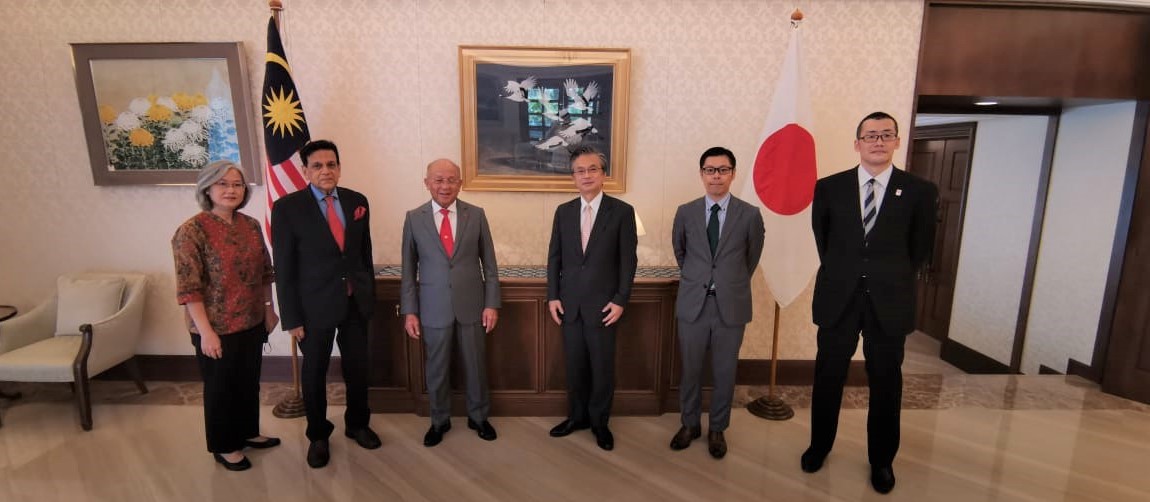
From left-to-right: Datuk Seri Mohamed Iqbal, Vice-President, MAJECA, Tan Sri Azman Hashim, President, MAJECA, H.E. Takahashi Katsuhiko, Ambassador of Japan to Malaysia, Mr Goh Peng Ooi, EXCO Member, Tan Sri Dr Michael Yeoh,Hon. Secretary and Mr Nakagawa Kazutaka, Second Secretary, Embassy of Japan.
H.E. Takahashi Katsuhiko, Ambassador of Japan to Malaysia presenting a gift to Tan Sri Azman Hashim, President, MAJECA.
MAJECA is grateful to H.E. Ambassador of Japan for making time to have lunch with MAJECA’s President and senior Executive members.
On 30 November to 2 December 2021, MATRADE led a Virtual Export Acceleration (EAM) to Tokyo and Osaka in conjunction with World Expo 2025. MAJECA was invited to speak on the panel: Market & Knowledge sharing session on Day 1 titled “Business Opportunities between Malaysia – Japan: Leveraging on World Expo 2025”. Representing MAJECA was Ms Ng Su Fun, Executive Secretary and joining alongside her were Mr Niqman Rafaee Mohd Sahar, Director, MATRADE Japan and Ms Nagisa Matsuba, Investment Promotion & Overseas Business Partner, International Affairs Department, Osaka International Business Promotion Center (IBPC Osaka).
The pandemic has reshaped how local and international business communities do business around the world. Digital transformation and diversification of business models are now the main keys for business survival.
This event served as an early preparation for the Malaysian companies to gear up for the World Expo 2025 which will be held in Osaka. One of the major opportunities identified by MATRADE include the supply of building materials in relation to Japan’s aspiration to make its cities modern and smart. Additionally, MATRADE had noted growing interest for Muslim-friendly related sectors, Halal products and services, green technology, ICT, lifestyle and pharmaceuticals, amongst others, spurred on by the sustainable development goals which include inclusiveness and environmental agenda.
The summary of the Virtual Export Acceleration (EAM) Japan programme was as follows:
Day 1 (30 November):
Opportunities @ World Expo 2025, Osaka
Market & Knowledge Sharing Session – Business Opportunities between Malaysia & Japan: Leveraging on World Expo 2025
Sharing Session by Malaysian Companies and Japanese Importers
Day 2 (1 December): Explore the Market – Welcome to Japan
F&B, Halal & Lifestyle: Retail & Supermarket Virtual Tour
Building Materials and Construction related including Lifestyle (Furniture, Fixtures and Fittings etc.) Virtual Site Visit @ Commercial / Hotel Projects
Business Matching and Market Updates with Chambers / Business Federation Members
Day 3 (2 December): It’s Time for Business – Business Meeting Sessions
The sessions consisted of business pitching session by Malaysian companies to Japanese companies, participants and viewers (including Japanese Chamber members), and eBizMatch Online Business Meeting Session between Malaysian and Japanese companies.
Thhe market and knowledge sharing session titled “Business Opportunities between Malaysia-Japan: Leveraging on World Expo 2025”. The session featured the following speakers:
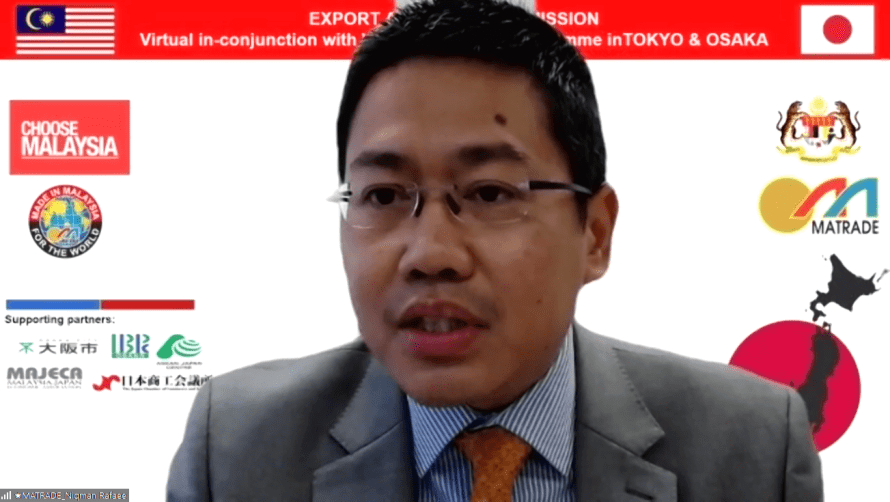
Mr Niqman Rafaee Mohd Sahar, Director, MATRADE Japan
Ms Nagisa Matsuba, Investment Promotion & Overseas Business Partner, International Affairs Department, Osaka International Business Promotion Center (IBPC Osaka)
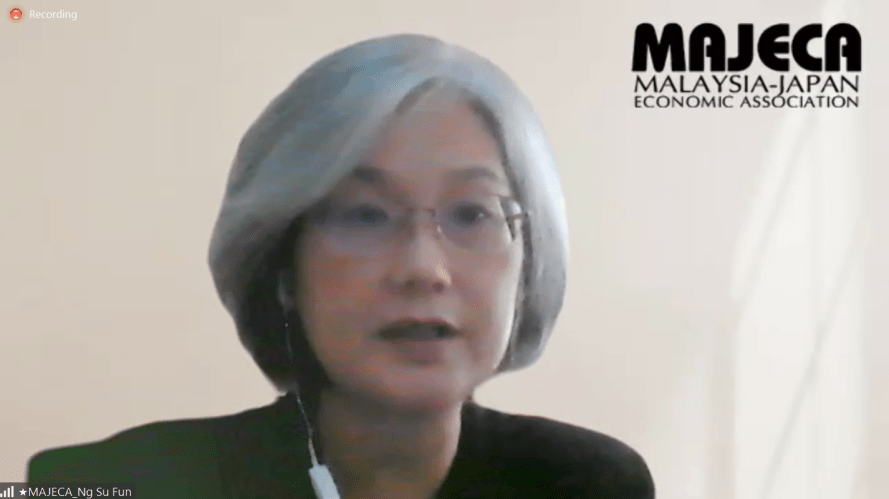
Ms Ng Su Fun, Executive Secretary, MAJECA
The following are some highlights on the first day of the Virtual EAM:
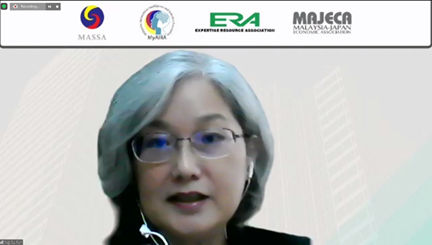
Pn Sharimahton Mat Saleh, Deputy CEO, Export Acceleration, MATRADE giving her opening remarks.
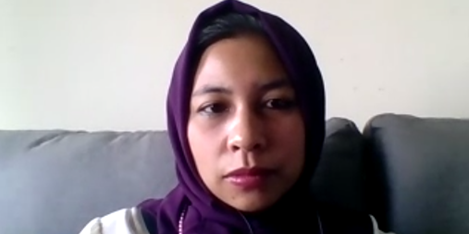
Mr Nor’Azam bin Mohd Idrus, Charge d’ Affaires ad Interim (CDA), Embassy of Malaysia in Tokyo, delivering his welcoming remarks.
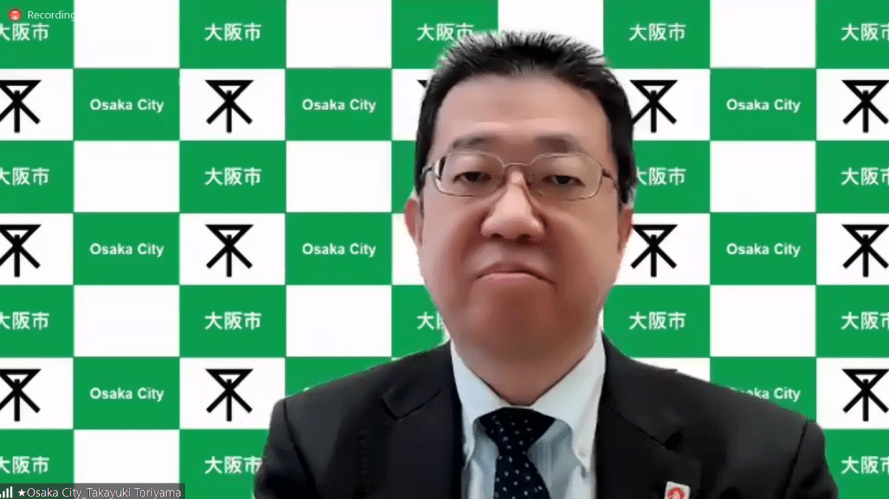
Mr Takayuki Toriyama, Director, Business and International Promotion, Economy Strategy Bureau, Osaka City Government & Director, Osaka Business Partner City Council delivering his welcoming remarks.
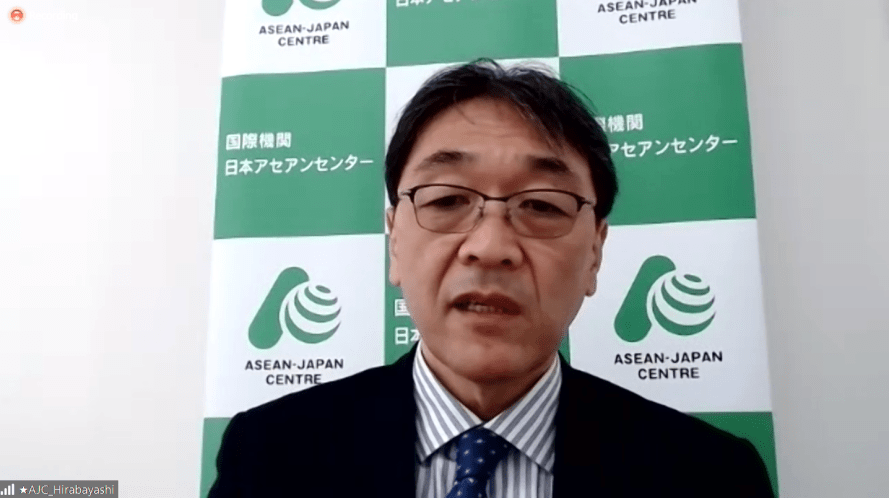
Mr Kunihiko Hirabayashi, Secretary-General, ASEAN-Japan Centre delivering his address.
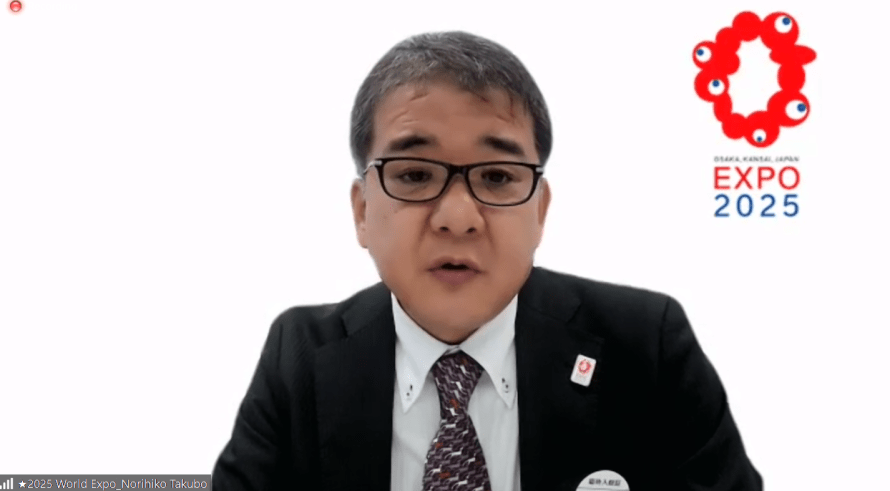
Greetings and briefing by Japan Association for the 2025 World Exposition, updates on the current progress and preparations for World Expo 2025 and new opportunities for Malaysia-Japan were shared by Mr Norihiko Takubo, Executive Director, Policy and Planning Bureau, Policy and Planning Department, Japan Association for the 2025 World Expo.
Mr Niqman Rafaee Mohd Sahar, Director, MATRADE Japan
Ms Nagisa Matsuba, Investment Promotion & Overseas Business Partner, International Affairs Department, Osaka International Business Promotion Center (IBPC Osaka)
Ms Ng Su Fun, Executive Secretary, MAJECA
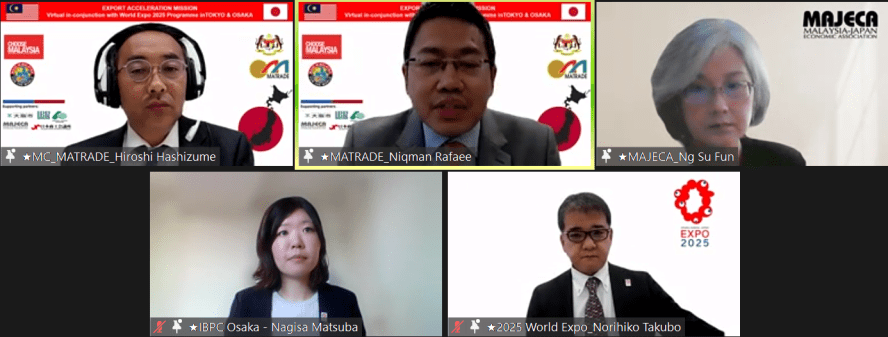
A group photo of the speakers answering questions during the Q & A session moderated by Mr Hiroshi Hashizume, MATRADE Osaka (top-left).
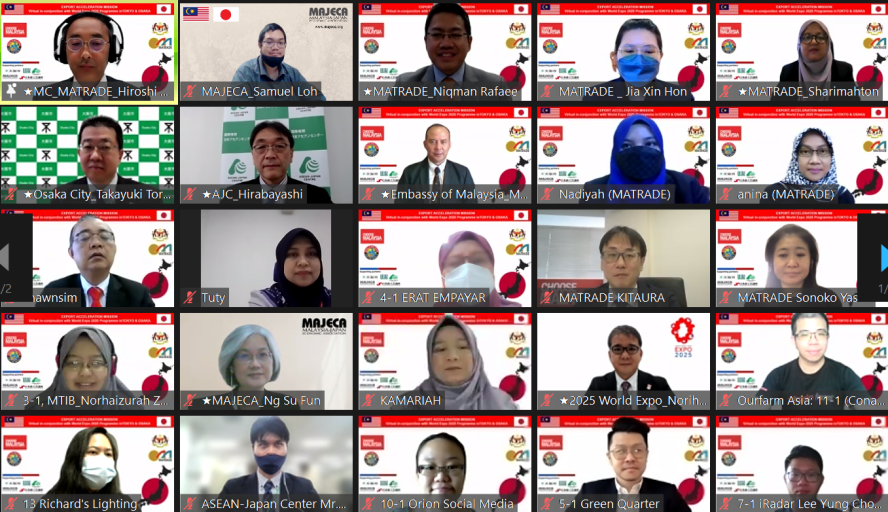
A group photo of the role-players and VIPs.
Group photos of the participants on Day 1 of the EAM
MAJECA records its appreciation to MATRADE for extending the invitation to speak at this Virtual Export Acceleration (EAM) Japan.
On 26 November 2021, Mr Masashi Shiraishi, Chief Executive in Malaysia, General Manager of Kuala Lumpur Branch, Mitsubishi Corporation paid a Courtesy Call on MAJECA President, Tan Sri Azman Hashim to personally hand over Letters from Mr Mikio Sasaki, Immediate Past President, JAMECA & Chairman Emeritus, Mitsubishi Corporation and Mr Kakiuchi, President, Mitsubishi Corporation, to Tan Sri Azman Hashim to congratulate him on receiving the Order of The Rising Sun, Gold and Silver Star from His Majesty, the Emperor of Japan during the 2021 Autumn Conferment of Decorations on Foreign Nationals.
Tan Sri Azman Hashim, President (left) and Mr Masashi Shiraishi, Chief Executive in Malaysia, General Manger of Kuala Lumpur Branch, Mitsubishi Corporation (right) in conversation.
Tan Sri Azman Hashim reading the letters from Mr Mikio Sasaki, Immediate Past President, JAMECA & Chairman Emeritus, Mitsubishi Corporation and Mr Kakiuchi, President, Mitsubishi Corporation.
Tan Sri Azman Hashim, President giving a copy of the MAJECA 40th Anniversary Book to Mr Masashi Shiraishi, Chief Executive in Malaysia, General Manager of Kuala Lumpur Branch, Mitsubishi Corporation as a token of appreciation.
Tan Sri Azman Hashim expressed his appreciation for the thoughtfulness and effort in delivering the letters to him in person, and shared his admiration for Mr Mikio Sasaki for his extraordinary long service as President of JAMECA (15 years).
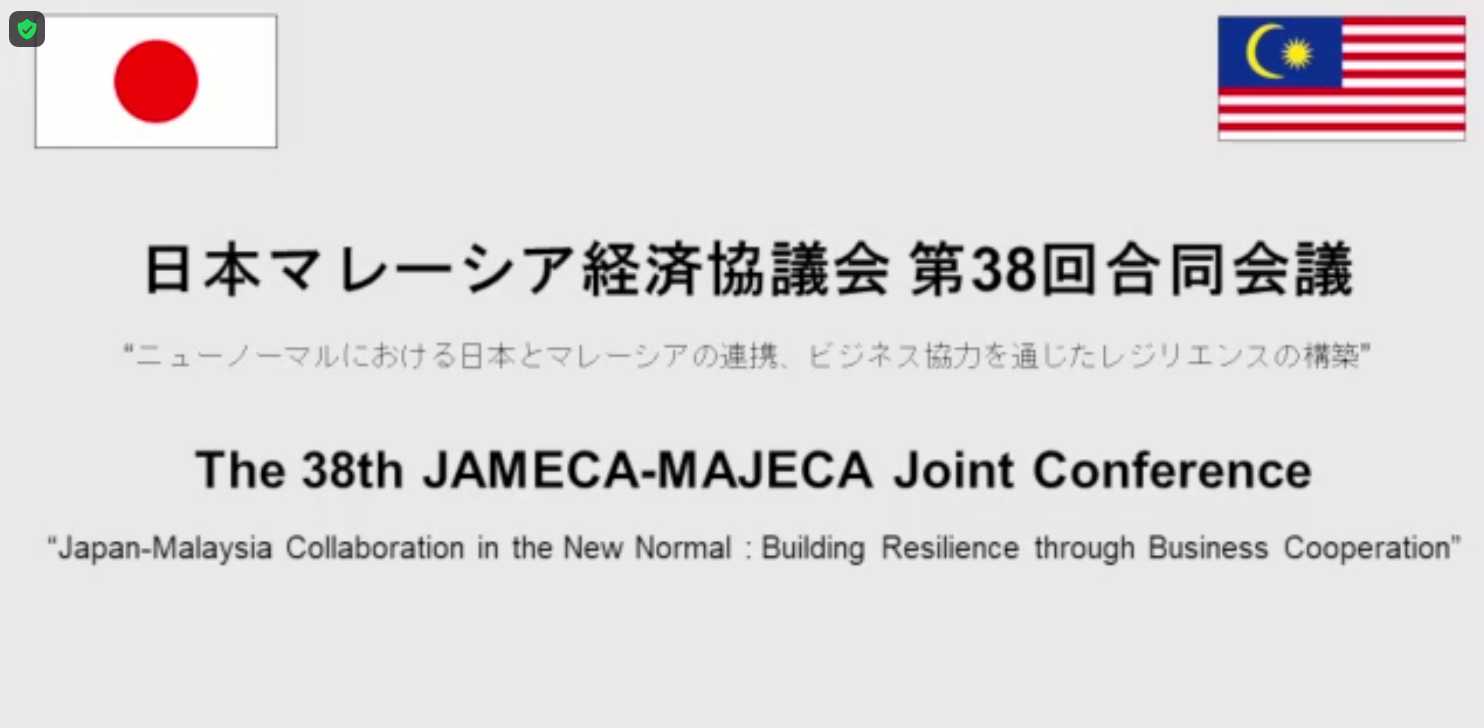
The 38th edition of the JAMECA – MAJECA Joint Conference was held on 27th October 2021.
Hosted by JAMECA, the Joint Conference theme was ‘Japan – Malaysia Collaboration in the New Normal: Building Resilience though Business Cooperation’.
This conference welcomed 200 participants from Malaysia and Japan representing members of JAMECA and MAJECA, including Government officials and its agencies, alongside business associations, thinktanks and the business communities from both countries.
A VIP meet-and-greet session was organised with the following in attendance:
Mr Tsuyoshi Nagano, President, JAMECA
Tan Sri Azman Hashim, President, MAJECA
H.E. Hiroshi Oka, Ambassador, Japan
H.E. Dato’ Kennedy Jawan, Ambassador, Malaysia
Mr Mikio Sasaki, Immediate Past President, JAMECA
Mr Kuniharu Nakamura, Vice President, JAMECA
Dato’ Taib Abdul Hamid, Vice-President, MAJECA
Datuk Seri Mohamed Iqbal, Vice-President, MAJECA
Mr Daiji Kojima, President, JACTIM
Tan Sri Dr Michael Yeoh, Hon. Secretary, MAJECA
Mr Kazuto Sasaki, Sec. Gen, JAMECA who hosted the session.
A group photo of the attendees of the meet-and-greet session before the Joint Conference proper started:
The programme of the Joint Conference was as follows:
The Joint Conference began with opening remarks from the distinguished leadership of JAMECA and MAJECA.
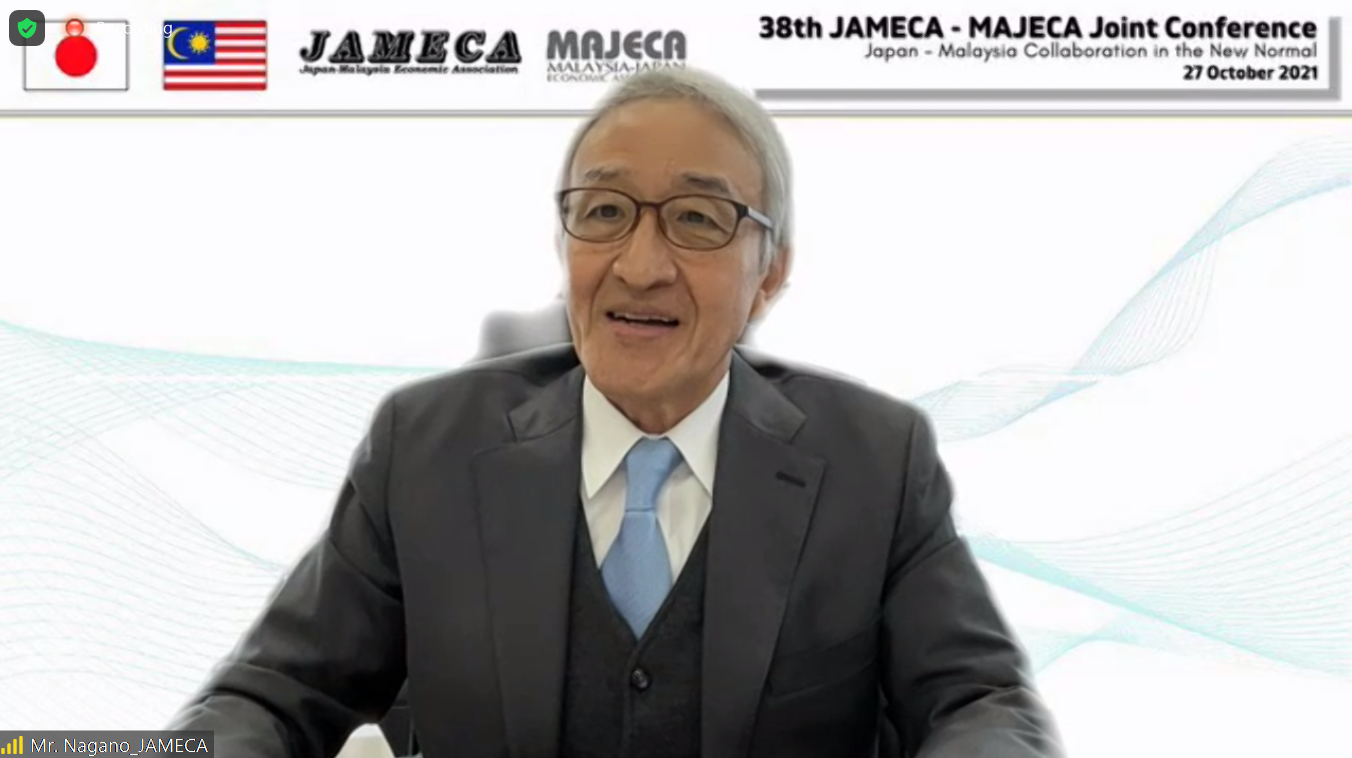
Mr. Tsuyoshi Nagano, President of Japan-Malaysia Economic Association (JAMECA), delivering his opening remarks.
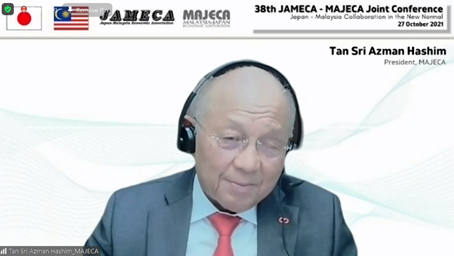
Tan Sri Azman Hashim, President of Malaysia-Japan Economic Association (MAJECA), delivering his welcome address.
Following on, the congratulatory messages by the Prime Minister of Japan and Prime Minister of Malaysia were read by the Ambassadors of the respective countries, after which, the Ambassadors of Japan and Malaysia delivered their respective remarks to the Joint Conference.
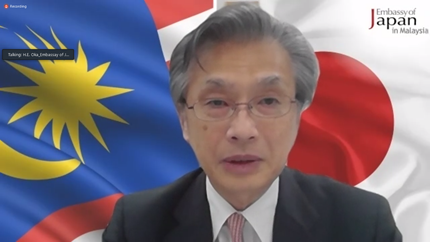
H.E. Hiroshi Oka, Ambassador Extraordinary and Plenipotentiary of Japan to Malaysia read the congratulatory message by H.E. Fumio Kishida, the Prime Minister of Japan.
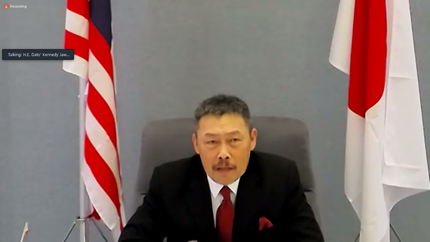
H.E. Dato’ Kennedy Jawan, Ambassador of Malaysia to Japan read the congratulatory message by YAB Dato’ Sri Ismail Sabri Yaakob, Prime Minister of Malaysia.
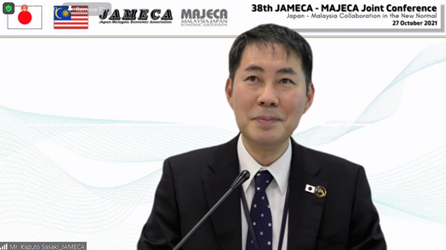
Mr Kazuto Sasaki, Secretary General of Japan–Malaysia Economic Association (JAMECA) was the emcee of the Joint Conference.
A special recorded address by YB Dato’ Seri Mohamed Azmin Ali, Senior Minister of the Ministry of International Trade and Industry (MITI), Malaysia was presented as follows:
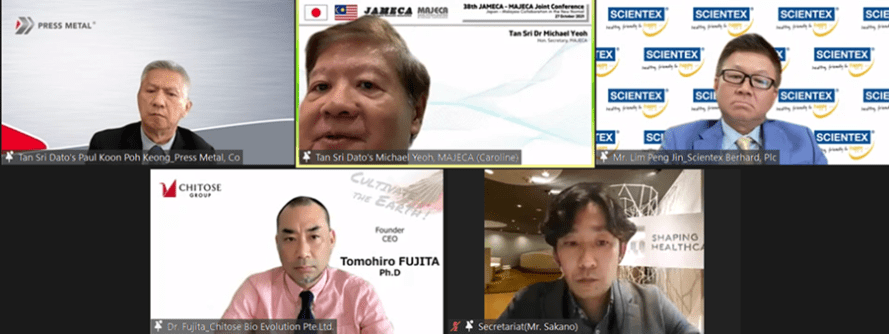
The plenary session, with the theme of “Building Resilience through Business Cooperation” was moderated by Tan SriMichael Yeoh, Hon. Secretary of MAJECA.
The Conference’s Plenary session featured two Malaysian and two Japanese companies sharing how they overcame the challenges faced by their businesses during the pandemic, their strategies and insights to remain resilient and to have a sustainable business model, giving opportunities for further collaboration with new partners to expand their businesses.
Tan Sri Dr. Michael Yeoh, Hon. Secretary, MAJECA moderator of the Plenary Session.
The presenters were as follows:
Mr. Teppei Sakano, Representative Director, CEO, Allm Inc.
Mr. Lim Peng Jin, Managing Director, CEO, Scientex Berhad.
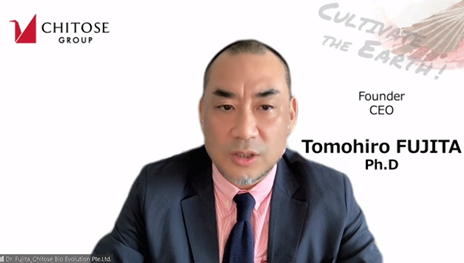
Dr. Tomohiro Fujita, Chief Executive Officer, Chitose Bio Evolution Pte. Ltd.
Tan Sri Dato’ Paul Koon Poh Keong, CEO, Press Metal.
Following the presentations, the Joint Conference proceeded into a panel discussion-cum-Q & A session led once more by Tan Sri Dr. Michael Yeoh.
The presenters discussed the following:
Mr. Teppei Sakano – presented various medical ICT products and solutions of Allm Inc. that had been developed and emphasized that investment through business cooperation with like-minded partners have brought more business opportunities for Allm Inc.
Mr. Lim Peng Jin – in spite of the challenges posed by the Covid-19 pandemic, Scientex Berhad had been able to make good progress on building a resilient and sustainable business model for its property and flexible packaging business lines, together with its Japanese Joint Venture partners.
Dr. Tomohiro Fujita – expressed Chitose Bio’s aim to establish a new renewable energy source based on microalgae in the hope to complement the current global fossil fuel dependency. He also showcased Chitose Bio’s successful agricultural research station built with sustainable and smart features, in Cameron Highlands, Pahang.
Tan Sri Dato’ Paul Koon Poh Keong – spoke on Press Metal’s aluminium smelting and extrusion business and its progressive investments into integrated upstream and downstream alumina value chain, focusing on sustainability as its main driving focus.
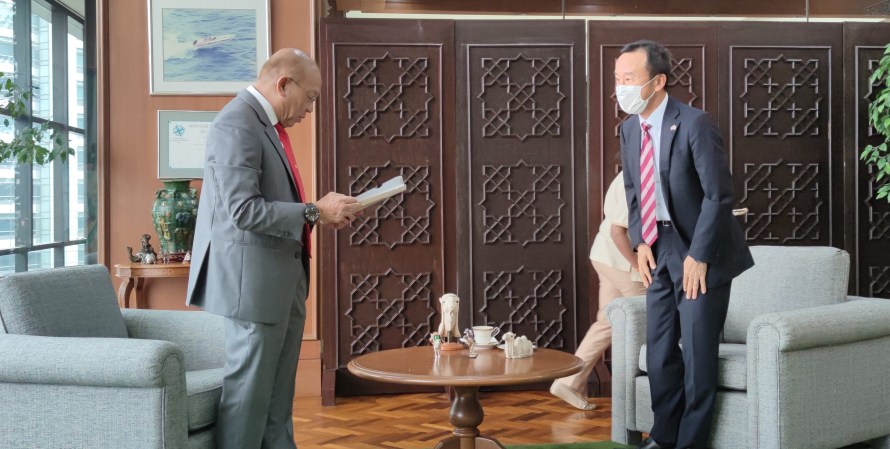
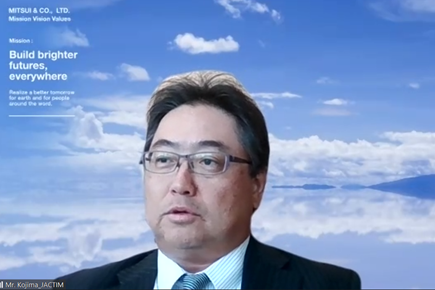
Following the plenary session was a Presentation by Mr. Daiji Kojima, President of the Japanese Chamber of Trade & Industry (JACTIM), Malaysia (pic below) giving an overview of its members’ investment activities in Malaysia.
The Joint Conference ended with closing remarks by the Vice-Presidents of JAMECA and MAJECA.
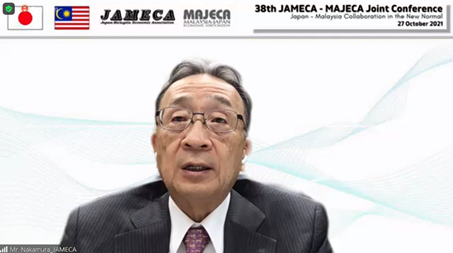
Mr Kuniharu Nakamura, Vice President of Japan-Malaysia Economic Association (JAMECA) giving his closing remarks.
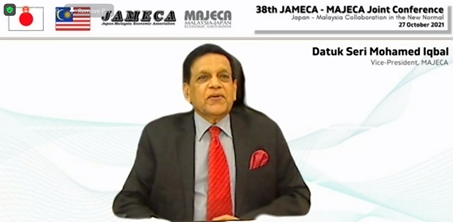
Datuk Seri Mohamed Iqbal, Vice-President of Malaysia-Japan Economic Association (MAJECA) giving his closing remarks.
On behalf of MAJECA, Datuk Seri Mohamed Iqbal announced that the 39th Joint Conference will be hosted by MAJECA in 2022.
A meeting between InvestPerak and MAJECA was held on 2 November 2021 in the MAJECA Secretariat Office.
Attendees from InvestPerak:
En Izran Abdullah, CEO
Dr Ahmad Shahir Abdul Aziz, Senior Manager, InvestPerak & Special Officer to YB EXCO
En Mohd Noor Arif Zakaria, Investor Relations Manager
Attendees from MAJECA:
Ms Ng Su Fun, Executive Secretary
Mr Samuel Loh, Programme Executive
The meeting highlighted the investment thrusts of the state of Perak, and its SilverValley initiative, developing an “industrial corridor” that covers the entire state of Perak to attract investments in key sectors aimed at driving growth for the state (https://www.investperak.gov.my/silvervalley/). The meeting also discussed key areas of engagement and collaboration with MAJECA for 2022.
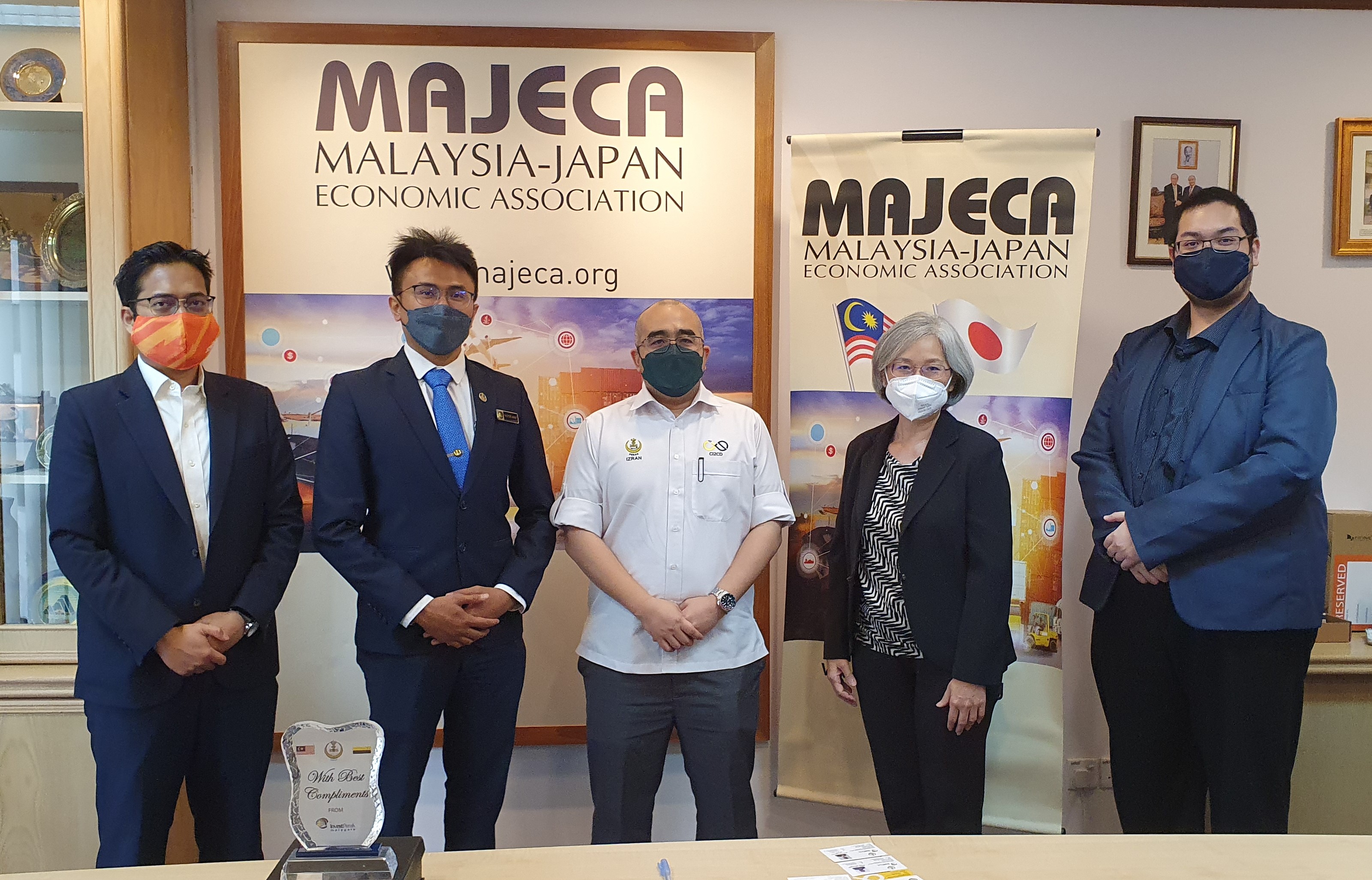
From left-to-right: Dr Ahmad Shahir Abdul Aziz, Senior Manager, InvestPerak & Special Officer to YB EXCO; En Mohd Noor Arif Zakaria, Investor Relations Manager, Invest Perak; En Izran Abdullah, CEO, Invest Perak; Ms Ng Su Fun, Executive Secretary, MAJECA and Mr Samuel Loh, Programme Executive, MAJECA.
En Izran Abdullah, CEO, InvestPerak presenting a token from InvestPerak to Ms Ng Su Fun, Executive Secretary, MAJECA.
Tan Sri Azman Hashim, President, MAJECA and Datuk Seri Mohamed Iqbal, Vice-President, MAJECA had a luncheon with H.E. Hiroshi Oka on 25 October 2021 hosted at the Ambassador’s residence. Also in attendance at this luncheon were, Mr Nagakawa Kazutaka, Second Secretary, Embassy of Japan, Mr Hosomi Masashi, Economic Counsellor and Ms Ng Su Fun, Executive Secretary, MAJECA.
From top-left, clockwise: Ms Ng Su Fun, Executive Secretary, MAJECA, Datuk Seri Mohamed Iqbal, Vice-President, MAJECA, Tan Sri Azman Hashim, President, MAJECA, H.E. Hiroshi Oka, Ambassador of Japan to Malaysia, Mr Hosomi Masashi, Economic Counsellor, Embassy of Japan and Mr Nakagawa Kazutaka, Second Secretary, Embassy of Japan.
Datuk Seri Mohamed Iqbal (left), Vice-President, MAJECA in the midst of conversation with H.E. Hiroshi Oka, Ambassador of Japan to Malaysia.
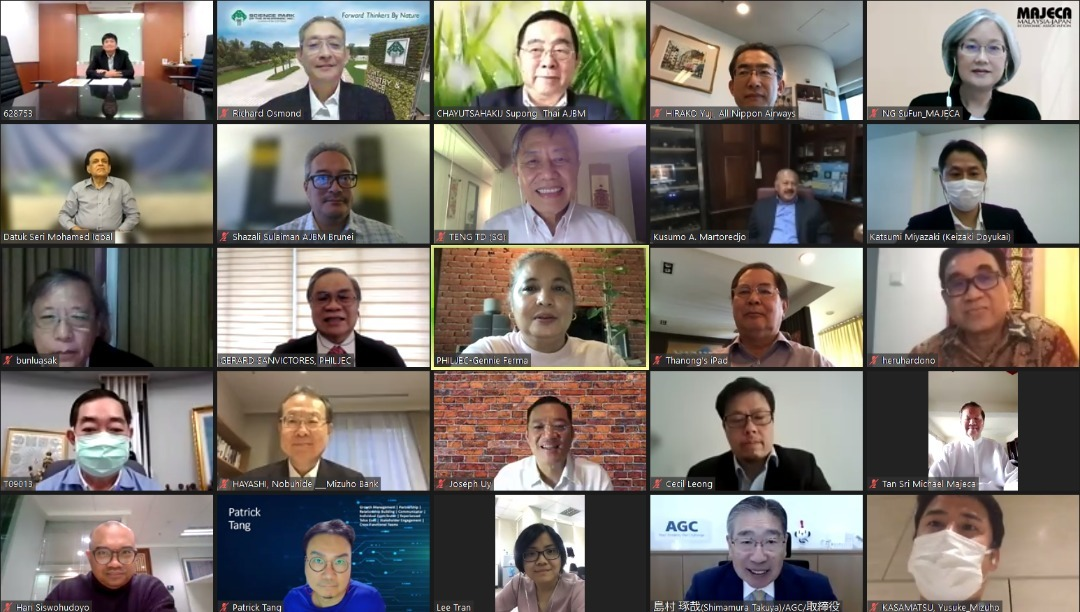
AJBM Malaysia, represented by MAJECA, attended the 47th ASEAN-Japan Business Meeting, (AJBM) Preparatory Meeting on 8 October 2021 which was hosted by the Philippines-Japan Economic Cooperation Committee (PHILJEC) alongside Keizai Doyukai (Japan Association of Corporate Executives).
This meeting was chaired by Mr Gerard B. Sanvictores, Chairman, 47th AJBM & Chairman, PHILJEC and co-chaired by Mr Nobuhide Hayashi, Chairman of Asia-Japan Relations Project Team, Keizai Doyukai.
Attendees from the AJBM Malaysia Committee comprised:
Datuk Seri Mohamed Iqbal, Vice-President, MAJECA
Tan Sri Dato’ Dr Michael Yeoh Oon Kheng, Hon. Secretary, MAJECA
Ms Ng Su Fun, Executive Secretary, MAJECA
Representatives from Keizai Doyukai, Japan and the ASEAN AJBM Steering Committees were in attendance.
The meeting discussed the outcome of last year’s 46th AJBM successfully held virtually in March 2021.The 47th AJBM is tentatively scheduled to be held in Manila, Philippines in March 2022.
The 47th AJBM Preparatory Meeting discussed key and relevant issues affecting the region and the business community, especially in the light of the ongoing Covid-19 pandemic situation affecting all our respective countries. The preparatory meeting covered the following:
The 47th AJBM will be a held in a hybrid format across three days with key parts of the meeting hosted in Manila with an option for virtual attendance to lower hurdles for participation. The meeting format will be finalised by the end of this year.
The proposed theme for the 47th AJBM will be “Beyond COVID-19: Envisioning the Future with Digitalisation in ASEAN and Japan”. The Meeting will continue to encourage closer public-private partnership with the involvement of Governments.
Potential topics of the Meeting include:
Rebuilding the Healthcare System;
Responding to Climate Change: Renewable Energy and Green Business;
Paving the Way to New Normal through Digitalisation;
Topics raised at the 45th and 46th AJBMs will continue to be kept in view, this includes, Digitalisation, Start-ups and Sustainability (especially the SDGs).
Group photos of the participants from the AJBM Steering Committees from ASEAN and Japan, Kezai Doyukai:
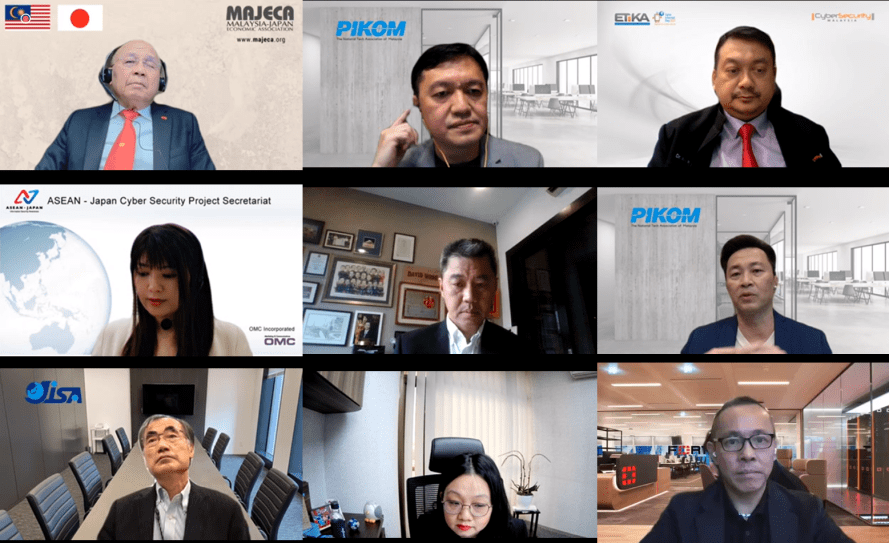
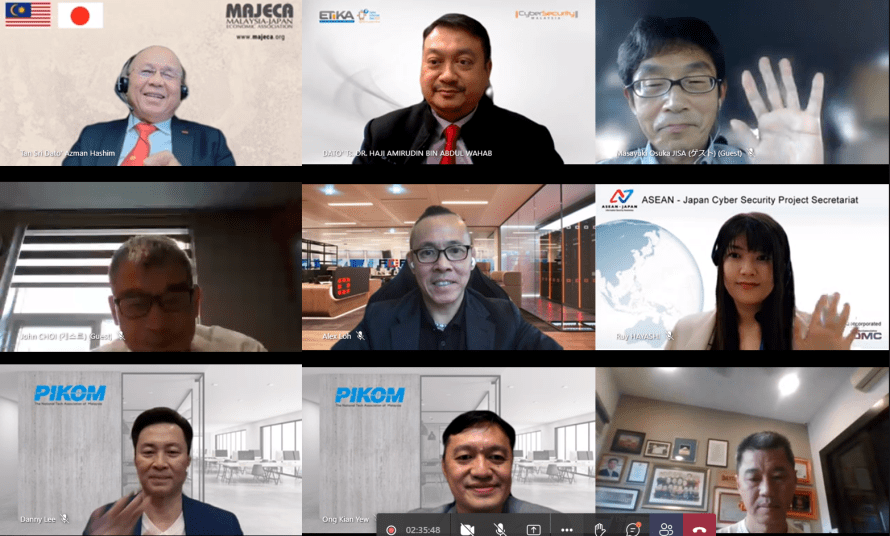
The Malaysia-Japan Economic Association (MAJECA), in collaboration with the National Tech Association of Malaysia (PIKOM), the Asian-Oceanian Computing Industry Organization (ASOCIO), in association with CyberSecurity Malaysia and the Malaysia South-South Association (MASSA) jointly organised a webinar on cybersecurity, titled “How Safe Are You Online?”, on 18th August 2021 over Microsoft Teams. 200 participants registered of which 130 logged on. The participants came from various business sectors, universities, organisations, and government agencies from Malaysia, Japan, Korea and from the developing countries (incl. Bangladesh, Bosnia, Chile, Guinea, Taiwan and Thailand).
More and more businesses of all sizes and sectors are embracing the ‘digitalisation imperative’ to remain competitive and resilient. In this current IR4.0 era and exacerbated by the ongoing pandemic, business systems, processes and data have to be constantly updated and to remain relevant.
The ongoing digital transformation, pivots on investments into the adoption of new technologies, processes and automation. The increasing integration of digitised data-driven services, while improving business resilience and function, has also exposed users to new areas of vulnerability.
This webinar addressed these vulnerabilities and featured experts, institutions and solution providers from across Japan, Korea and Malaysia to holistically inform and equip participants on aspects of cybersecurity from industry, practitioner and legal standpoints.
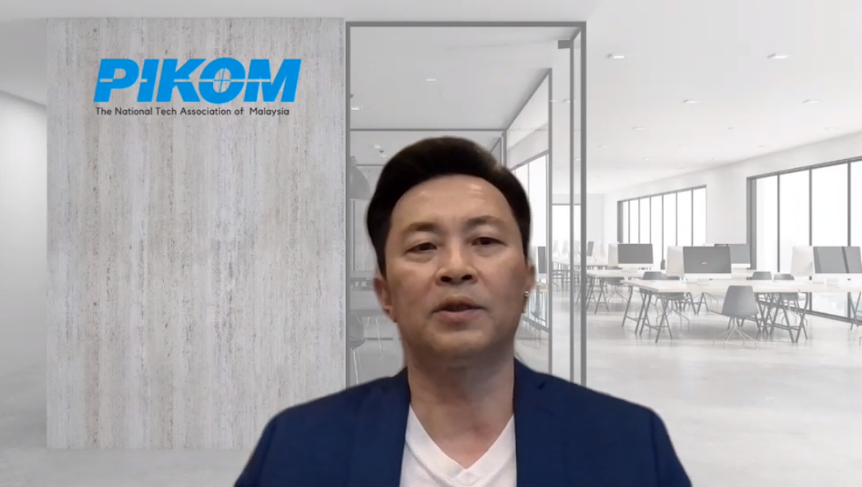
Mr Ong Kian Yew, Chief Executive Officer, National Tech Association of Malaysia (PIKOM) as the emcee of the webinar.
The webinar began with welcoming addresses from the leadership of MAJECA, PIKOM and ASOCIO after being introduced by the emcee.
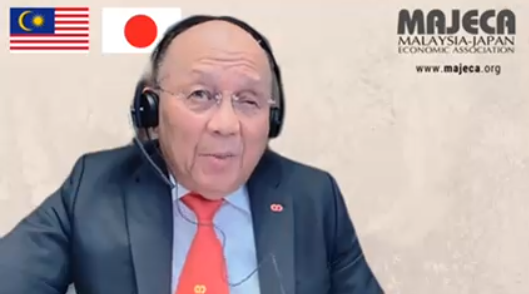
Tan Sri Azman Hashim, President, Malaysia-Japan Economic Association (MAJECA) & Malaysia South-South Association (MASSA), delivering his welcome address.
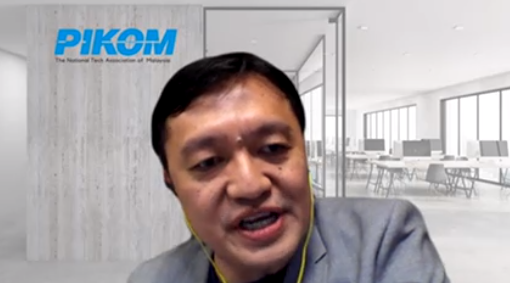
Mr Danny Lee, Chairman of The National Tech Association of Malaysia (PIKOM), giving his welcome address.
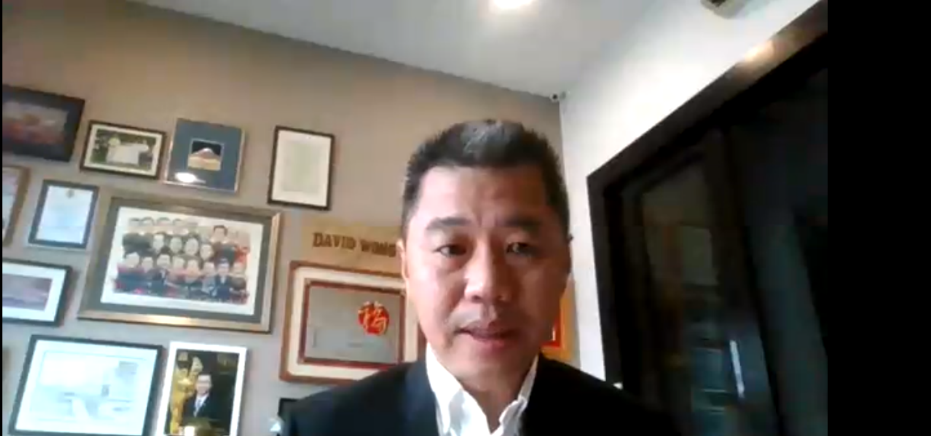
Mr David Wong, Chairman of Asian-Oceanian Computing Industry Organization (ASOCIO), giving his welcome address.
Following that, a report on the collaborative venture of ASEAN – Japan Cybersecurity Project was delivered by the representatives of Japan IT Services Industry Association (JISA), in which they announced the launching of a new initiative called Cybersecurity Business Platform (CBP) that will help businesses in ASEAN region to overcome cybersecurity attacks.
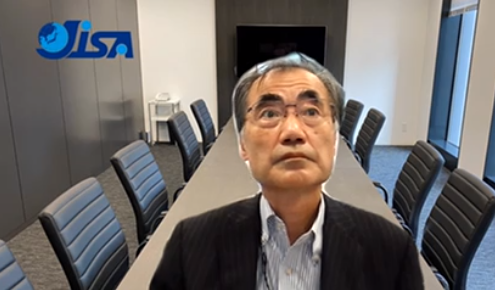
Mr Takeshi Miyamoto, President of Japan IT Services Industry Association (JISA) delivering his greetings and introducing JISA and its activities.
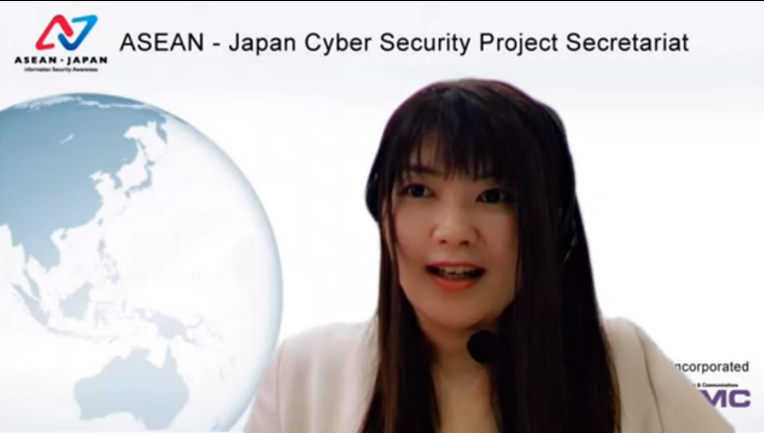
Ms Ruy Hayashi, Japan IT Services Industry Association (JISA), the International Coordinator for ASEAN – Japan Cybersecurity Project introducing a new JISA intiative to support businesses titled ASEAN-CBP (ASEAN – Cybersecurity Business Platform) @ https://asean-cbp.org.
The discussion on the topic of the importance of cybersecurity and how having a cybersecurity strategy can ensure business continuity, was moderated by Dato’ Ts. Dr. Haji Amirudin Abdul Wahab, CEO of CyberSecurity Malaysia. Joining alongside him was a distinguished panel comprising industry, practitioner and legal experts in the field of cybersecurity.
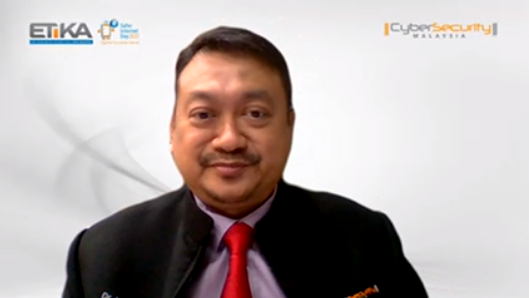
Dato’ Ts. Dr. Haji Amirudin Abdul Wahab, CEO, CyberSecurity Malaysia, the session moderator.
The panelists were as follows:
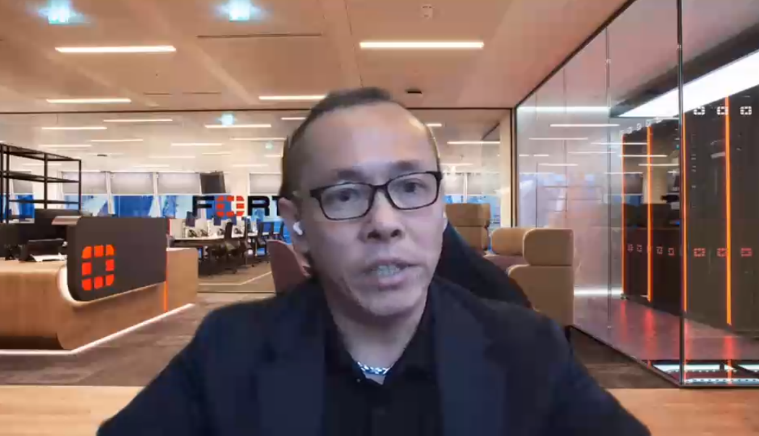
Mr Alex Loh, Chairman of PIKOM Cybersecurity Chapter &Country Manager of Fortinet Malaysia Sdn Bhd.
Mr John Choi, Deputy Chairman of Asian-Oceanian Computing Industry Organization (ASOCIO) & Founder of MarkAny Inc.
Ms Janet Toh, Partner of M/S Shearn Delamore & Co.
Following the presentations by the speakers, the webinar proceeded into a panel discussion-cum-Q&A session led once more by Dato’ Ts. Dr. Haji Amirudin Abdul Wahab. The panelists discussed the following:
The complexity of cyberthreats today that is becoming more intelligent, borderless and faceless engaging in malware and phishing tactics. As COVID-19 pandemic accelerated the push towards all things digital, there is a need to invest in cybersecurity solutions to manage our business digital infrastructures and to ringfence them against such crimes.
Mr Alex Loh highlighted the struggles of hiring cybersecurity professionals due to the lack of talents that specialize in this field. Hence, the need to develop these talents by providing training and education from university level. There are also opportunities for organisations to provide cybersecurity training and programmes to increase awareness among the general workforce. He also encouraged organisations to undertake cybersecurity assessments and invest in appropriate cybersecurity solutions.
Mr John Choi opined that existing cybersecurity solutions may not be enough to combat cyber threats that is increasingly becoming more intelligent and sophisticated with the use of Artificial Intelligence (AI). Therefore, a multi-layered defense must be deployed. The first layer of prevention engaging traditional technology such as Firewalls can be augmented by a second layer e.g. data encryption. A third and emerging cybersecurity technology i.e. tracing technology, can now trace the source of the cyberattack. He also touched on the topic of ensuring data and privacy protection by using homomorphic encryption – a technology that allows us to perform statistical analysis over encrypted data on a larger scale.
Ms Janet Toh touched on the issue of cyberattacks becoming increasingly sophisticated and the rise of ransomware and phishing exploits through machine learning. The accelerated digitisation is caused by many organisations having to adapt to remote/hybrid work models due to the pandemic situation. Work-from-home employees have to rely on their own personal devices, removable storage devices, whilst some companies have started using cloud servers and had to quickly approve new software. This situation exposes organisations to data risks because work-from-home employees are all in different locations, operating from different networks, not working with the organization’s perimeter network on multiple devices. Ms Janet Toh’s slides can be accessed here.
The webinar brought to light the procedures for individuals or an organisation to follow when their digital identity and data e.g.: user ID, passwords, banking details – is hacked. The suggested procedures include, amongst others, shutting down the organisation’s network, perform forensic analysis to recover the data loss and investing in insurance. For individuals, the best step is to alert and warn close family members and friends regarding the threat and not to respond to any unusual requests on one’s devices.
Dato’ Ts. Dr Haji Amirudin Abdul Wahab – highlighted the need for an improved regulatory framework, the importance of collaboration between the government and private sectors as well as academia. CyberSecurity Malaysia also provides a platform – MyCERT’s Cyber999 Help Centre – to report data breaches incidents whether it is individual or organisational issues.
Dato’ Ts. Dr Haji Amirudin Abdul Wahab, the session moderator, wrapped up the webinar with the following closing remarks:
The need to conduct audits to understand the value of the data and information and data channels within each organisation, thereby enabling decision-makers to evaluate the optimal cybersecurity strategy to employ.
Cybersecurity solutions (especially at the enterprise-level) needs to develop a multi-layered defence and preventive system to defend against the borderless cyber threats that is evolving to be more accessible, intelligent and creative.
The importance of facilitating and investing in cybersecurity from a holistic standpoint to increase awareness among the general workforce at the people-level; at the process-level, instituting sound cybersecurity policies and frameworks; and at the technology-level recognising that cyber criminals are evolving with the advent of more IR4.0 technologies such as AI, video-cloning etc. Therefore, it is important to keep abreast with new cybersecurity technologies and infrastructures that are interdisciplinary and adaptive.
The following is a gallery of photos taken by the MAJECA Secretariat at the webinar:
Tan Sri Azman Hashim, President, MAJECA delivering his welcome address.
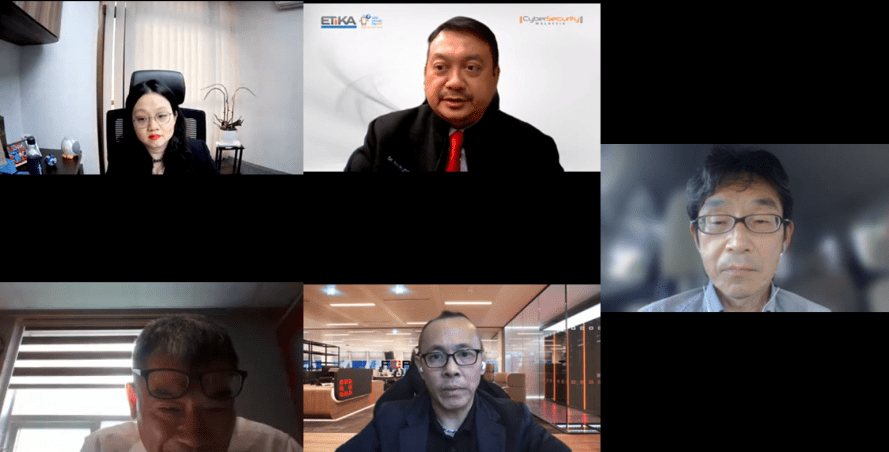
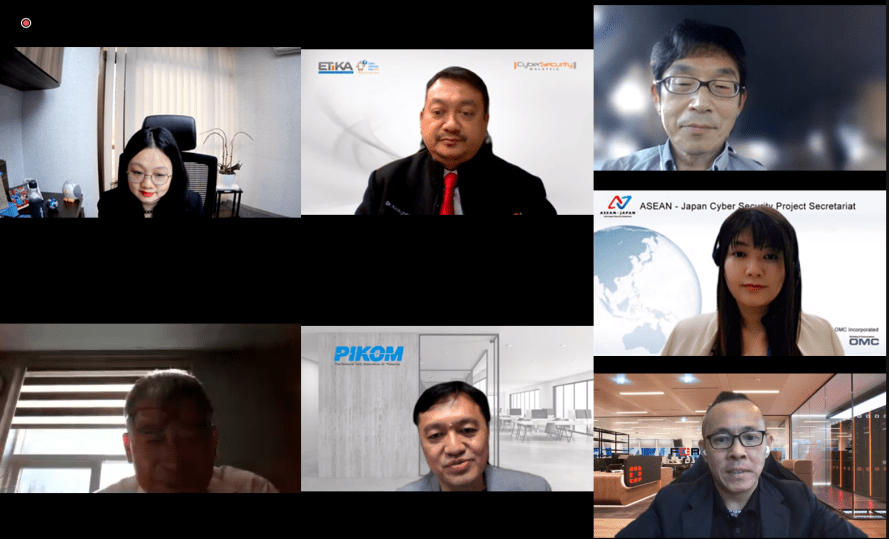
From top-left, clockwise: Ms Janet Toh, Dato’ Ts. Dr Haji Amirudin Abdul Wahab, Mr John Choi and Mr Alex Loh during panel discussion
Mr Masayuki Osuka, another representative from JISA, also joined the Q&A session.
The ASEAN-BAC Malaysia Webinar was held on 22 June 2021 titled “RCEP and CPTPP as Game-Changers in ASEAN’s Post COVID-19 Economic Recovery” involved a private sector bodies such as representatives of Malaysian trade associations, chambers of commerce, professional bodies, and foreign business associations and business councils. MAJECA, represented by Datuk Seri Mohamed Iqbal was a speaker in Panel 1 of the webinar to discuss “How can Malaysia capitalise on RCEP to reduce the trade deficit between Malaysia-Japan?”.
The following is the media release provided by ASEAN Business Advisory Council Malaysia, titled ‘Private Sector in Malaysia led by the ASEAN Business Advisory Council Malaysia calls for RCEP and CPTPP to be Ratified by end-2021’. For more information please visit http://aseanbac.com.my/
MEDIA RELEASE: Private Sector in Malaysia led by ASEAN Business Advisory Council Malaysia calls for RCEP and CPTPP to be ratified by end-2021
Kuala Lumpur, 22 June 2021 — A large group of private sector bodies led by the ASEAN Business Advisory Council (ASEAN-BAC) Malaysia released a joint memorandum urging the government to ratify the Regional Comprehensive Economic Partnership (RCEP) and Comprehensive and Progressive Agreement for Trans-Pacific Partnership (CPTPP) by the end of 2021 to allow Malaysia to gain an early mover’s advantage in positioning itself as a gateway to nearly a third of the world’s population through the ASEAN, RCEP, and CPTPP markets.
According to the memorandum, early ratification of the RCEP and CPTPP would enable Malaysian businesses to gain market access, to better source for raw materials and integrate their supply chains with other RCEP and CPTPP markets, derive greater certainty concerning intellectual property rights, as well as promote greater transparency, information sharing, trade facilitation, economic cooperation, and coherence in e-commerce regulations.
The memorandum of support was signed by representatives of Malaysian trade associations, chambers of commerce, professional bodies, and foreign business associations and business councils on the occasion of the ASEAN-BAC Malaysia webinar on 22 June 2021 titled “RCEP and CPTPP as Game-Changers in ASEAN’s Post COVID-19 Economic Recovery.”
Click hereto view the Memorandum of Support video (above). Click here to view the Memorandum of Support.
Ministry of Domestic Trade and Consumer Affairs (DTCA) Secretary-General Datuk Seri Hasnol Zam Zam Ahmad, for his special address said, “The government is committed to ensuring that the post-pandemic economic recovery process is implemented in a structured and timely manner and that free trade agreements such as the RCEP will certainly help in the recovery of domestic businesses.”
ASEAN-BAC Malaysia Chairman Tan Sri Dato’ Dr. Munir Majid noted that political uncertainties are unconducive for business and the economy causing key strategic decisions such as ratifying the RCEP and CPTPP to be delayed and Malaysia losing its first-mover advantage.
“Greater dependence is now on the civil service to be professional to drive home the point the country cannot be falling back. Businesses too, particularly the SMEs, should be well prepared to seize the opportunities and to face challenges in a highly competitive global environment,” said Tan Sri Dr. Munir Majid.
1. Ratify the RCEP and CPTPP at the soonest to accelerate Malaysia’s post-pandemic recovery
Ratification of the RCEP and CPTPP remains one of the private sector’s top recommendations to help businesses bounce back from the impact of the COVID-19 pandemic, according to the ASEAN-BAC Malaysia’s Pathway for Malaysia 2021 report which contains 137 recommendations for economic recovery from the private sector.
“Malaysia has spent many years negotiating these landmark agreements and should therefore ratify them quickly to take advantage of the opportunities they present, especially for our post-pandemic recovery,” said ASEAN-BAC Malaysia Council Member Tan Sri Yong Poh Kon.
Supporting this view, the Federation of Malaysian Manufacturers (FMM) President Tan Sri Dato’ Soh Thian Lai said that, “While the signing of the RCEP and CPTPP was a significant achievement for the country, the government must hasten to ratify them to stabilize manufacturing activities and rebuild supply chain connectivity in the region.”
The Socio-Economic Research Centre (SERC) of ACCCIM’s Executive Director Lee Heng Guie concurs, saying that the country is counting on the speedy implementation of this mega trade deal to secure a strong export-led economic recovery. “The tariff reductions that the RCEP promises are important, so too are the other non-tariff benefits such as enhanced trade, services and investment facilitation, including the easing of trade procedures,” added the economist.
Such benefits would be particularly beneficial in the supply chain industry, according to ASEAN-BAC Malaysia Council Member Raja Singham, since these trade deals would allow Malaysia to further integrate Malaysia’s border trades and expand the country’s access to trade and investment opportunities.
2. RCEP and CPTPP membership will bolster Malaysia’s reputation as a pro-business economy
“What will Malaysia lose from not ratifying the CPTPP, which potentially sets the standard for international trade rules going forward?” asks Asia-Pacific Economic Cooperation (APEC) Secretariat Executive Director and former MITI Secretary-General Tan Sri Dr. Rebecca Fatima Sta Maria.
“Malaysia will eventually be subjected to such rules as it is an open economy and CPTPP members who have committed to rules and disciplines will be seen to be more attractive and business-friendly,” she said.
Malaysia-India Business Council (MIBC) Honorary Secretary Datuk K. Surendran Kutty Krishnan, opined that bold economic reforms were needed to entice new investors since other markets in the region are also becoming increasingly competitive. He also noted that the RCEP and CPTPP were only two of the 16 free trade agreements that Malaysia has signed but has yet to ratify and enforce.
While Malaysia and Japan have had a bilateral free trade agreement for over a decade, the Malaysia-Japan Economic Association (MAJECA) nevertheless urges the government to proceed with the ratification of the RCEP and CPTPP without further delay, as they could serve as a conduit for an even wider range of collaborations and trade flows between the two countries, according to MAJECA vice president Datuk Seri Mohamed Iqbal.
3. Regulatory frameworks should be harmonized to complete free trade agreements
The RCEP is the world’s largest trading bloc with 15 member countries representing around 30 percent of global GDP, while the CPTPP is a free trade agreement among 11 countries representing approximately 13.5 percent of global GDP.
Malaysian Organisation of Pharmaceutical Industries (MOPI) president, Billy Urudra remarked that once ratified, the prices of generic drugs are expected to drop due to increased competition. In highly regulated industries such as the pharmaceutical industry, it is imperative that the FTAs are accompanied by a harmonized regulatory framework for the FTAs to be meaningful.
As for avenues for dispute resolution, LAWASIA and Bar Council Malaysia past president, Christopher Leong believes that the Investor-State Dispute Settlement provisions in the CPTPP provides for the well-developed and recognised dispute resolution mechanism by way of international arbitration. According to him, the mechanism is transparent and open to development, and as such should not be a reason for a country to not ratify the agreement.
The 44th Annual General Meeting (AGM) of the Malaysia-Japan Economic Association (MAJECA) was convened virtually over Zoom on Wednesday, 16 June 2020 at the Boardroom, 26th Floor, Bangunan Ambank Group, Jalan Raja Chulan, 50200 Kuala Lumpur.
In order to comply with the Government’s and/or relevant authorities’ directives and guidelines on public gatherings, meetings and events, arising from the measures to combat the spread of the COVID-19 pandemic during the Recovery Movement Control Order, the 44th AGM was convened via a hybrid of in-person as well as virtual participation.
The following were elected to the Executive Committee of MAJECA for the new term 2021-2022.
Office Bearers
President: YBhg Tan Sri Azman Hashim
Vice-Presidents:
YBhg Dato’ Md Taib Abdul Hamid YBhg Datuk Seri Mohamed Iqbal YBhg Datuk Jason Tai Hee YBhg Tan Sri Dato’ Seri Lodin Bin Wok Kamaruddin
Honorary Secretary: YBhg Tan Sri Dato’ Dr Michael Yeoh Oon Kheng
Honorary Treasurer: Mr Yeonhang Chuah
Executive Committee Members
YBhg Dato Yeoh Seok Kian
YBhg Tan Sri Rastam Mohd Isa
Mr Ravindran Kurusamy
Mr Steven Tee Shin Yau
Mr Goh Peng Ooi
Some photos of the meeting proceedings can be found below:
Tan Sri Azman Hashim, President & Chairman delivering his Chairman’s Statement.
Dato’ Md Taib Abdul Hamid, Vice-President
YBhg Datuk Seri Mohamed Iqbal, Vice-President
YBhg Datuk Jason Tai Hee, Vice-President
YBhg Tan Sri Dato’ Seri Lodin Bin Wok Kamaruddin, Vice-President
YBhg Tan Sri Dato’ Dr Michael Yeoh Oon Kheng, Hon. Secretary
Mr Yeonhang Chuah, Hon. Treasurer
YBhg Tan Sri Rastam Mohd Isa, Member of Executive Committee
Mr Gary Tang, Member of Executive Committee
Tan Sri Azman Hashim, President & Chairman thanking all participants for making time to attend the meeting.